
How Much Does a Wedding Videographer Cost in the UK? A Realistic Guide to Price Ranges and What You’re Paying For
How Much Does a Wedding Videographer Cost in the UK?
A Realistic Guide to Price Ranges and What You’re Paying For
I’m Luke Batchelor, an editorially-inspired cinematic wedding videographer and photographer, based in Kent and filming across the UK and Europe. This blog is where I share honest, practical guidance for couples who care about how their wedding feels, not just how it looks. If you’re in the planning phase and trying to make confident decisions, you’re in the right place.
This particular question comes up constantly, and it deserves a proper answer. Because “How much does a wedding videographer cost in the UK?” is rarely a simple number. It’s a spectrum, and that spectrum is shaped by coverage, approach, experience, how the day is recorded, and what you want to watch back in ten years’ time.
In this guide, I’ll break down realistic UK price ranges, what influences cost, how to compare quotes properly, and the questions that prevent disappointment. I’ll also talk about what changes when you’re investing in a more editorial, cinematic style of wedding film, where story and emotion are treated with the same care as aesthetics.
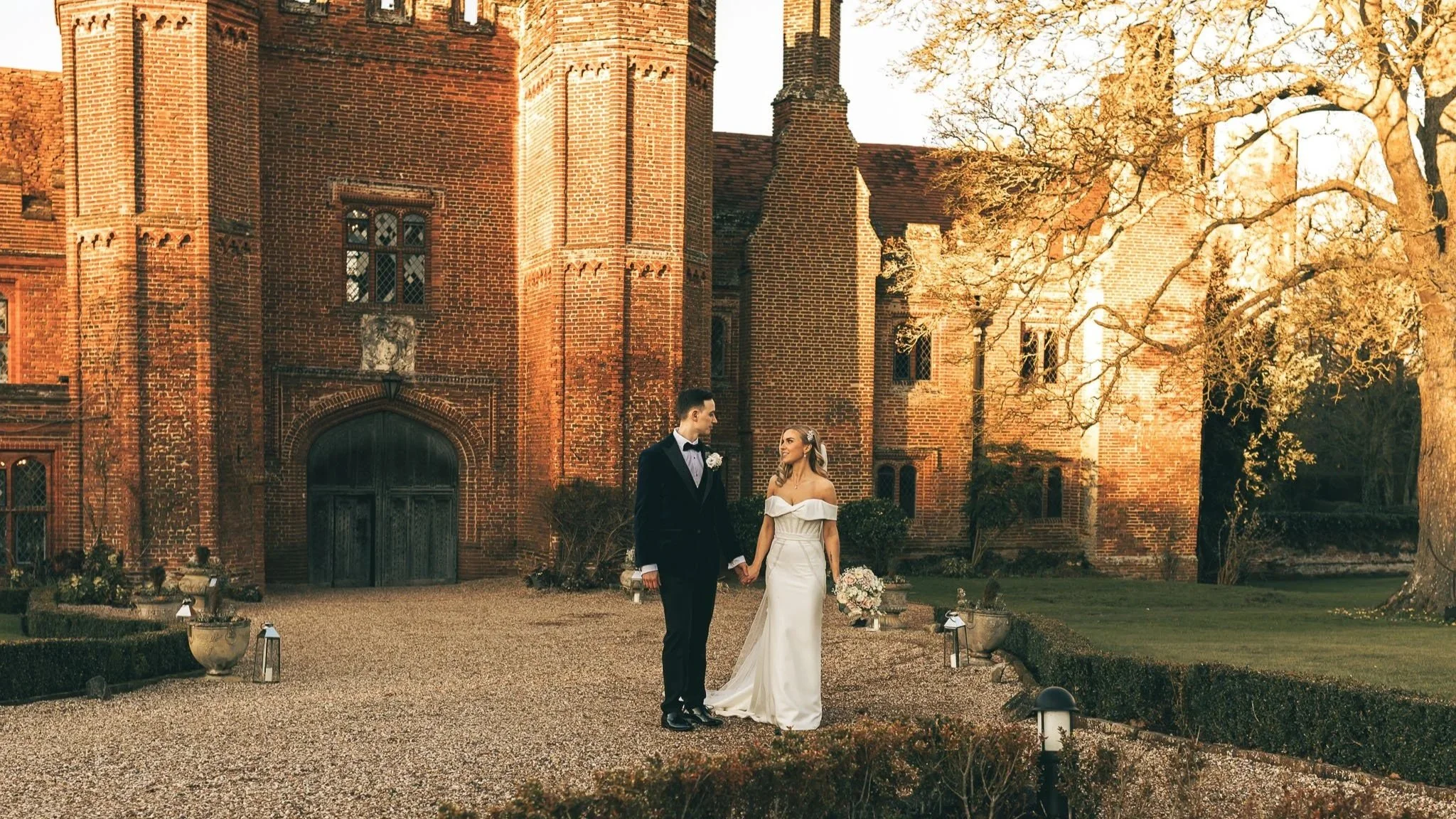
If you’d like to see what that looks like in practice as you read, you can browse my wedding film portfolio here:
The short answer (with the context you actually need)
Most couples don’t want a lecture. They want a number they can plan around, and a way to know whether a quote is sensible.
In the UK, many planning platforms cite average spend figures around the low-to-mid £1,000s (taken from references at Bridebook, Hitched & Bark) . That’s a helpful benchmark for understanding the wider market, but it isn’t the whole story. There is an enormous difference between a basic coverage offering and a crafted, narrative-led cinematic wedding film. Both can be called “wedding videography”, but they are not the same product and the level of work, care and attention that does into each variant differs wildly.
The more useful way to look at videography cost is to understand what tier you’re in and what tends to be included at each level of budget. The ranges below are deliberately broad because regions, dates, demand, and deliverables all move the needle, and each couple is individual in not only their budget requirements, but also what they want from their wedding film experience and how they want their memories to be captured and told.
-
Limited coverage, minimal deliverables; often minimal equipment and experience, with inconsistencies in both filming and editing.
Who it suits: Couples with tight budgets who just want a few clips from the day
-
Shorter coverage or simpler deliverables; often single shooter; less emphasis on sound design and story structure
Who it suits: Smaller weddings, tighter budgets, couples who primarily want a record
-
Full-day coverage becomes more common; higher consistency in filming and edit; improved audio approach.
Who it suits: Couples who want a polished highlight and dependable coverage
-
Premium, experience-led service; stronger storytelling; better audio capture; more intentional edit.
Who it suits: Couples who care about narrative, pace, aesthetics, and rewatch value
-
High-end cinematic storytelling; elevated sound design; multi-camera coverage; refined post-production; often destination or multi-day options.
Who it suits: Couples planning high-production celebrations who want a film that feels like them
If you’re reading this as a luxury UK couple with a larger overall wedding budget, it’s normal to land in the premium and high-end bands, because your venues, schedules, guest experience, and styling tend to demand a level of craft and reliability that sits above “basic coverage”- and let me explain why.
Why videography pricing feels confusing (and why it’s not your fault)
There are a few reasons the pricing feels opaque.
First, videography isn’t a single commodity. You’re not buying “a wedding video”. You’re buying a creative service that begins before the wedding and ends long after it, and the difference between suppliers is often hidden in the details. Time, equipment, experience, attitude, approach all factor into the overall experience- and cost.
Second, videography bundles time in a way most people don’t instinctively calculate. Couples will compare a quote to “hours on the day”, but the largest portion of work typically happens after the wedding. A carefully edited cinematic film is not created in a weekend (on the contrary, I know from my own experience that a truly in-depth cinematic wedding film can take a few weeks of solid work to achieve). It’s built through a post-production process that includes story decisions, pacing, sound design, colour work, music licensing considerations, and multiple rounds of refinement. Some of these factors contain their own outlays and costings (for example, licensing music, which again is a sliding scale of cost vs quality), and other hidden costs such as software upgrdes and extras the videographer would have purchased in order to create the films in the style you have discovered.
Third, couples tend to compare quotes based on deliverables, but deliverables are not equal. Two suppliers might both offer a “highlight film”, yet one might deliver a film that’s essentially a montage, while another delivers something with intentional emotional build, narrative cohesion, clean audio, and a finish that feels elevated rather than assembled. Deliverables are obviously a factor and consideration, however couples planning their wedding shouldn’t be surprised to find that a 5-7 minute highlight film with a carefully thought out narrative may cost significantly more from one videographer, than a 30-40 minute film will from another that’s just clips of the day.
If you’ve been given three quotes and they’re wildly different, it doesn’t automatically mean someone is overcharging or someone is “too cheap”. It usually means you’ve been offered three different products.
What you’re actually paying for (beyond the wedding day)
This is the section that changes how couples make decisions, because it reframes cost as craft and responsibility rather than a simple hourly rate. In the world of wedding videography and photography, charging by an hourly rate is a bad business model- the more experienced you get, and the more efficent you are, the more money you would lose.
Therefore, videography pricing is usually not based on ‘the number of hours’, but some factors like the following;
Pre-production: planning, timeline guidance, and experience
A strong videographer is quietly improving your day before they ever pick up a camera.
This can look like timeline suggestions that create breathing space for portraits and golden hour, advising where to place readings for better sound and emotional flow, making sure your ceremony audio plan is robust, or working alongside your planner and photographer so nothing feels rushed. I know from personal experience that simply turning up on the morning of the wedding and hitting record is a recipe for disaster- especially if you are trying to create a dynamic, narrative-led wedding film, like the ones I create.
When you’re investing at the premium level, you’re paying for someone who understands how weddings run, where the pressure points appear, and how to keep the creative coverage calm and intentional without turning your day into a production. You are investing in them for their experience to know what to do when, not if, things go wrong and to take the pressure and stress away from you. An experienced videographer can see problems before they appear, work around them and still create a high-quality product, no matter the situation.
Coverage: equipment, redundancy, and capture quality
Professional wedding coverage is built on redundancy. Multiple cameras for key moments, multiple audio sources, backup recording paths, and a workflow that expects the unexpected.
A ceremony happens once. Speeches happen once. The words your partner says in a quiet moment while you’re holding hands happen once. Your videographer’s job is to preserve those moments even if something goes wrong: a mic drops out, a camera stops working, weather changes, the schedule shifts, or a venue layout forces a quick re-plan- these are all moments your wedding videographer has to consider and put in place redundancies for.
Higher-end videography often includes a deeper level of redundancy, which adds cost but protects your memories, or extra equipment such as off-camera lighting, that significantly elevates the look and feel of your film. In my wedding videography work I bring a series of off camera lights, I utilise multiple high-end cameras in case of issues, have a whole host of audio recorders, batteries, memory cards, lenses, filters, stabilisers- all to create the signature look of my films and guarantee my couples have a final film they adore and exceeds their expectations.
Post-production: the hidden majority of the work
This is where the biggest differences live.
Post-production is where a film becomes cinematic rather than simply “edited”. It’s where pacing is shaped so the film breathes, where emotional beats are held rather than rushed, where a story is built around vows, speeches, letter readings, and your day’s natural rhythm.
Sound is usually the most underestimated element. Clean audio capture is one thing, but sound design is another. It’s the difference between hearing words and feeling them. It’s also one of the reasons a premium film takes longer and costs more. You can watch any of the examples in my wedding film portfolio to discover this- the birds singing in the trees, the wind rustling the leaves, footsteps on the ground. These may not sound like much, however this is was gives editorial wedding films their immersion.
Colour work is another. Not just making the image “look nice”, but creating consistency across changing lighting conditions, skin tones, and environments, so the film feels cohesive and timeless. It’s not just making a film look ‘cinematic’, it’s creating consistency and amplifying the story through colour. Learning colour grading and mastering it isn’t the work of a moment- it’s something that quite literally takes years of hard work, practice and experience to master.
The biggest factors that change the price
Coverage hours and the shape of your day
Longer days require more filming time, more media, more audio management, and significantly more time in post-production. A 10–12 hour wedding with travel between prep, ceremony and reception is a very different editing workload compared to a one-location day.
If you’re planning a multi-location wedding, or one with complex logistics, it tends to sit higher on the pricing spectrum because the creative and technical demands rise.
Number of shooters and camera coverage
A single shooter can create beautiful work, but there are natural limits to what one person can capture simultaneously.
Additional shooters change what’s possible in moments like the ceremony and speeches, where reactions and multiple angles matter. They also create a calmer experience because coverage becomes less about rushing and more about intentional composition.
For couples who value emotion, reactions, and the feeling of being “inside” the moment when watching back, multi-camera coverage with additional shooters is often a meaningful upgrade.
Also factored into this should be travel. Professional videographers won’t leave anything to chance and will want to be close to you on the morning of your wedding day, which can often mean travel and hotel stays the night before. If theyve travelled a significant distance then don’t be surprised to be charged for two nights, as travelling back after a 14 hour wedding day isn’t feasible.
Audio approach (this matters more than most couples realise)
If you care about story, you should care about audio.
Premium coverage often includes multiple audio sources for ceremony and speeches, careful placement, contingency planning, and time spent ensuring the final film sounds clean and intimate rather than distant. For my wedding videography work, I always ensure there are a minimum of 2 audio sources for every person speaking- one as the main, one as a backup (and if I can put a third in there as well I will). Audio is the backbone of a fine art and editorial wedding film.
If you’re choosing between quotes, ask how they capture audio, how many sources they use, and what happens if one fails. The answer tells you a lot about what you’re paying for.
Editing style: montage vs story-led cinematic structure
Some films are built primarily around visuals and music. Others are built around narrative, using spoken words and sound bridges to create emotional continuity.
If your dream is a film that makes you feel like you’re back there, hearing voices, feeling the atmosphere, and remembering the exact emotional energy of the day, you’re usually looking for a story-led approach. That requires more intentional filming and more deliberate editing.
There’s a level of depth here than can curve the pricing. Is your videographer simply capturing elements of the day and trying to piece it together in the edit, or are they working intentionally with you to help create that comprehensive story. Think of things like letter readings, informal interviews, personal vows or pre-wedding story sessions that can be used to record all the elements of your story. These types of films are significantly more investment because of the work that goes into creating them.
Deliverables: what you receive and how you’ll actually use it
Deliverables can be a trap for comparison. Couples will sometimes choose the quote with the longest list, then find they only rewatch one film.
The most meaningful deliverables tend to be:
A crafted feature film you’ll rewatch on anniversaries.
A short teaser that’s easy to share.
Clean edits of ceremony and speeches, if they matter to you.
Everything else is optional depending on your priorities. Asking friends or family which wedding film they like to watch can give you a good understanding about what you are looking for. Do you need a 2 hour long documentary-style edit you watch once every few years, or do you prefer a sub-ten minute blast through your day whenever you like?
Time of year, date demand, and location
Some videographers will charge more for peak season Saturdays in the UK, as they carry more demand, or they may charge more based on the type of venue you have booked. Personally, in my wedding videography work, my pricing is static year-round (if anything, ‘off-season’ weddings through the winter are infinitely harder to work than peak summer weddings).
London also behaves differently to many other regions due to travel and schedule density. Other factors come into consideration for weddings in cities like London in comparison to a countryside estate in somewhere like Norfolk, Devon or Surrey, such as simply transporting all the equipment to the venue, moving between multiple locations, or factoring in certain unique elements like boat trips for riverside weddings or animal experiences at safari park weddings.
If you’re comparing quotes from suppliers who frequently work in high-demand areas and peak dates, that can be reflected in cost.
Venue style and production complexity
Weddings in manor houses, estates, castles, and luxury marquees often have a particular rhythm: longer days, more moving parts, larger guest counts, and higher aesthetic expectation.
This does not mean you must spend more. But it often correlates with couples wanting a film that matches the level of care they’ve put into everything else.
What “premium” wedding videography usually includes (in real terms)
Premium videography is less about “extras” and more about consistency and finish. It tends to include a higher level of:
Reliability and contingency planning.
Audio capture and sound design.
Editing craft and story pacing.
A calm, experienced presence on the day.
Intentional composition that feels editorial rather than incidental.
It’s also often more collaborative. If you have a planner, premium suppliers tend to integrate seamlessly with them. If you have a photographer who cares about aesthetics and flow, a premium videographer usually complements that rather than competing with it. I would actually say, in my experience, that videographers at the premium end of the scale understand fully the power of moments and the emotions intertwined with them- it’s something you get very familiar with when you have to link sequences and build emotion, rather than simply delivering a still image of a that moment.
Think of a dress reveal by a bride to her Father- a photographer needs one or two shots from that moment, but your videographer will understand how powerful that moment can be and so will want to set everything up in advance, meaning that when the moment happens they can be hands-off, capture that beautiful once-in-a-lifetime memory without interrupting it.
If you’re planning a wedding with a strong creative direction, your videographer becomes part of the team shaping how the day is remembered, not simply someone recording it.
“Can’t we just ask someone to film it?”
You can. And for some weddings, that’s genuinely fine.
But the trade-off is predictable: you might get footage, but you may not get the moments you didn’t realise mattered until they’re gone. You may not get clean audio. You may not get the pace and emotional build that turns clips into a film.
The value of a professional videographer isn’t that they own a good camera. It’s that they know where to be before the moment happens, how to anticipate the look between you, how to capture words cleanly, and how to craft the experience into something coherent, beautiful, and timeless. Not only this, they know how to tell that story in the edit to give it the impact it deserves.
Now, I’m fully aware that I will be biased here (after all, I wouldn’t be able to be a wedding videographer if I didn’t believe in what it is I am delivering for my couples), however if you’re investing in a wedding day you’ll never repeat, the question becomes: do you want a record, or do you want something you will feel again?
How to compare videography quotes properly (without getting overwhelmed)
Most couples compare on the wrong criteria. They compare hours and deliverables, then wonder why the films feel different.
Instead, compare on these practical indicators:
Watch three full films, not just highlights on Instagram
Short clips are designed to impress quickly. Full films reveal pacing, story clarity, audio quality, and whether the work remains compelling beyond the best ten seconds.
Listen to the ceremony and speeches in the film
If you can’t clearly hear vows and speeches, the emotional backbone weakens. This is one of the easiest ways to assess professionalism. Your videographer should be able to provide you with a full gallery that showcases how they capture these important moments.
Assess consistency across different lighting and venues
If every film looks beautiful only in golden hour, that’s a warning sign. A wedding day includes harsh midday sun, dim interiors, changing weather, and mixed lighting at night. Consistency is expertise.
Consider how you want to feel when you watch it back
This sounds abstract, but it’s the most practical question of all. Some couples want a party film. Some want romance. Some want something more editorial and cinematic, with a timeless tone that doesn’t feel trend-led.
Choosing someone whose work naturally matches your taste is usually the best way to avoid regret.
If you’re working with a planner, how videography cost changes
When you have a planner, your day often becomes more ambitious and more seamless. That’s a wonderful thing, but it also means videography can become more complex.
Planners often build schedules that maximise guest experience and flow. A videographer who works comfortably in that environment understands how to capture everything without interrupting it.
The cost change here is less about “planner weddings cost more”, and more about the fact that planned weddings often include:
More transitions and moments to capture.
More design detail.
More lighting and atmosphere changes.
More of an expectation that suppliers operate as a team.
If you’re a planner reading this and looking for a videographer who integrates smoothly, I’ve written a dedicated page about what it’s like to work together:
A realistic way to think about videography budget in a luxury wedding context
If your overall wedding investment is significant, videography becomes less about “Can we afford it?” and more about “What level of memory do we want to keep?”
In higher-end weddings, couples often treat photography and videography as equal pillars, because they serve different emotional purposes. Photography captures still beauty and detail. Film captures voice, movement, atmosphere, and energy. They work together.
A helpful mindset is to budget based on importance rather than tradition. If you know you will deeply value hearing voices again, and if your relationship with family and friends is a central part of the day, film tends to become one of the most meaningful investments.
UK vs Europe destination pricing (what changes)
For destination weddings in places like Italy, France, Portugal, Croatia, Switzerland, and Austria, pricing usually shifts because of logistics. This can include travel days, accommodation, local transport, and the reality that a destination celebration often becomes a multi-day story rather than a single day.
The other factor is coverage style. Destination couples often want more atmosphere coverage: the location, the arrival, the pace of the weekend. That can be beautifully cinematic, but it naturally expands the filming and edit workload.
The final factor is covering ‘off days’- that is to say, days where you are either travelling or are in-country but with no shoots planned, as these days will often come with a cost attached to them (normally 50% of a shooters fee), due to your videographer not being able to work where they normally would be able to at home.
If you’re planning a destination wedding and want a film that feels editorial rather than touristy, you’re typically looking at premium-level investment, because the craft is in making the location feel like a character in the story without stealing focus from you.
What to ask a videographer about pricing (so you don’t miss the important bits)
When couples ask, “Why do you cost what you cost?”, what they’re usually trying to protect themselves from is disappointment.
Here are the questions that genuinely matter, because they reveal what the experience and the final film will be like.
-
Do they build films around spoken words and narrative structure, or is it primarily visual montage? Neither is “wrong”, but one will match your taste better.
-
Ask how many sources, what backups exist, and how they deal with outdoor ceremonies.
-
Ask what the typical film structure is, how music is chosen, whether you can give preferences, and how they refine pacing.
-
Item descriptionProfessional suppliers have contingency plans. It’s an uncomfortable question, but it matters.
-
You don’t need to negotiate. You need to understand.
-
This tells you what the day will feel like, not just what the film will look like.
If you are interested in a what other questions you should be asking your videographer and photographer, I have a full guide below that should make the process seamless for you and give you all the answers you are looking for:
Example: what a “cinematic” wedding film looks like
If you want to sanity-check the difference between a basic video and a cinematic film, watch a full piece from start to finish. Look at how the story is built, how audio is used, and whether it feels timeless.

Where couples most often overspend (and where they rarely regret investing)
This isn’t about telling you what to do with your budget. It’s about helping you avoid the two common planning regrets.
The first regret is overspending on things you don’t emotionally revisit. That might be upgrades that were wonderful on the day but don’t live on in any meaningful way afterwards. They can still be worth it, but they’re often not what couples talk about years later.
The second regret is under-investing in anything that preserves the day. Because after the wedding, time moves quickly. People change. Family dynamics shift. Loved ones age. Friends move abroad. And suddenly, the value of recorded voices and real moments rises.
If you’re deciding whether videography matters, ask yourself a more personal question: do you want to remember the day, or do you want to feel it again?
For couples who are emotionally close to their families, who value speeches and vows, who want to rewatch their wedding with a glass of wine on anniversaries, film tends to become one of the most meaningful pieces of the wedding. It’s a cliche, but wedding films are one of, if not the only service you can invest in that grows in value over time.
How to choose a cost level that fits your priorities
If you’re still unsure what you should spend, here’s a grounded way to decide without getting lost in internet opinions.
First, decide what matters most to you in the film. Is it:
Hearing vows clearly?
A film that feels editorial and refined?
A story that reflects who you are, not just what happened?
Capturing guest energy and atmosphere?
A calm experience with minimal “performing”?
Then, watch full films from suppliers in different pricing tiers and notice what changes. The difference is rarely just camera quality. It’s the rhythm of the film, the clarity of audio, the timing of emotional beats, and the overall finish.
If you’re drawn to cinematic storytelling, it’s normal to invest above the market average, because your priorities are craft-led rather than purely coverage-led.
A clear next step (without pressure)
Conclusion
Wedding videography pricing in the UK can look inconsistent at first glance, but it becomes far clearer once you stop comparing suppliers as if they’re offering the same product. A quote isn’t simply “hours on the day” or a list of deliverables; it reflects the level of craft, the reliability of the capture, the quality of the audio, and the time and intention that goes into shaping your wedding into a film you’ll genuinely want to revisit.
If you’re working within a tighter budget, your goal is to prioritise the fundamentals: dependable coverage, clean audio for vows and speeches, and a finished film that feels cohesive. If you’re investing at the premium end, you’re usually choosing a more elevated experience and a more refined outcome—something that feels editorial, emotive, and timeless, rather than simply assembled from clips.
The simplest way to decide what’s “worth it” for you is to watch full films, not just highlights. Listen to how vows and speeches are captured. Notice whether the pacing holds your attention and whether the film feels like it reflects real atmosphere, not just a montage of the best visuals. The right choice is the one that matches how you want to remember the day, and what you want your future self to be able to feel again.
If you’d like a cinematic wedding film that prioritises story, emotion, and an elevated finish—while still feeling natural and unforced—I’d love you to explore my portfolio and see if the work resonates. From there, you can get in touch and tell me what you’re planning, where you’re getting married, and what matters most to you.
FAQ: Wedding Videographer Cost in the UK
-
Many UK planning resources cite average spend figures around the low-to-mid £1,000s, but averages don’t represent the premium and high-end market well. In practice, your cost depends on coverage hours, edit style, audio approach, and whether you want a crafted cinematic film or simpler coverage.
-
Lower pricing often reflects shorter coverage, fewer deliverables, a simpler edit process, less audio complexity, and sometimes earlier-stage experience. That doesn’t automatically mean the work is bad, but it often means the product is fundamentally different from premium cinematic storytelling.
-
If you want a story-led film with strong audio, refined finishing, and an experience-led approach, it’s common to see investment move into the £2,500–£4,000 range and beyond, depending on the wedding’s complexity and what you want included.
-
Often, yes. Demand, logistics, and schedule density can influence pricing. It’s also common for London celebrations to involve multiple locations, travel time, and longer coverage days.
-
A second shooter can significantly increase what’s captured during the ceremony and speeches, especially reactions. It also makes coverage calmer and more intentional. If emotion and storytelling matter, it’s one of the upgrades couples most often appreciate when watching back.
-
This varies widely, which is why comparing packages by name alone is unreliable. Many packages include a highlight or feature film, and some include ceremony and speech edits. The bigger differentiator is often audio approach and how story-led the editing is.
-
Not always. Some videographers include full edits as standard; others offer them as add-ons. If vows and speeches matter to you, ask explicitly what you’ll receive.
-
Turnaround times vary. Post-production workload, seasonality, and the level of finishing all influence delivery timelines. It’s normal for premium work to take longer because the edit is more involved.
-
Many videographers will welcome guidance on tone and preference, but music choices are often constrained by licensing and what works for pacing and story. The best approach is usually to share the feeling you want, rather than requesting a specific chart track.
-
Sometimes. Drone use depends on location, conditions, and permissions. In premium offerings it may be included as part of the creative toolkit, but it still adds planning and time.
-
Ask about travel, accommodation (if applicable), additional shooters, extended coverage, and delivery formats. A transparent supplier will outline this clearly.
-
Watch full films. Listen to the audio. Notice whether you feel drawn in, whether the film holds your attention, and whether it feels timeless. “Worth it” is usually a combination of craft quality and how much you value rewatching and reliving the day.
What would you like to do next?
If you’d like to keep planning with a little more clarity, here are a few places on my website that couples typically find helpful next—whether you’re still researching, comparing options, or ready to explore what your film could look like.
Explore full wedding films and see what resonates
If you want to understand the difference between “coverage” and a cinematic, story-led film, the most useful thing you can do is watch a few complete films from start to finish.
See a real example of a premium, editorial wedding story
If you’re drawn to refined styling, black-tie energy and strong narrative, this is a great example to browse alongside the pricing guidance above.
Planning your special day? Start here
If your wedding involves city logistics, multiple locations, or a planner-led schedule, this page offers a helpful starting point.
Enquire and start the conversation
If you already have your date and venue and you’d like to explore availability, you can get in touch here.