
Wedding Videographer vs Wedding Content Creator (UK): What’s the Difference and Do You Need Both?
Wedding Videographer vs Wedding Content Creator: What’s the Difference (and Which One Is Right for You)?
I’m Luke Batchelor—an editorially inspired, cinematic wedding videographer and photographer based in Kent, filming across the UK and Europe. This blog is where I share honest planning guidance for couples who care about how their wedding felt, not just how it looked.
If you’ve found yourself comparing a wedding videographer with a wedding content creator, you’re not behind, and you’re not overthinking. This is one of the most common planning questions in the UK right now, because modern couples want two very different things at once: they want a timeless, cinematic film they’ll treasure in ten years, and they want beautiful, immediate, social-first clips they can share while the day still feels fresh.
The confusion happens when these services get treated as interchangeable. They aren’t. They can complement each other brilliantly, but they achieve different outcomes, with different tools, different priorities, and different levels of technical reliability.
This guide will help you decide, without hype. You’ll learn what a wedding content creator actually does, what a wedding videographer delivers, how quality and audio differ in real terms, what to expect on turnaround, how costs tend to compare in the UK, and how to hire both without making the day feel crowded (or find a sweet spot between the two). Along the way, I’ll also share the approach I recommend if you’re investing in a high-end experience and want your wedding film to feel editorial, emotive, and genuinely re-watchable.
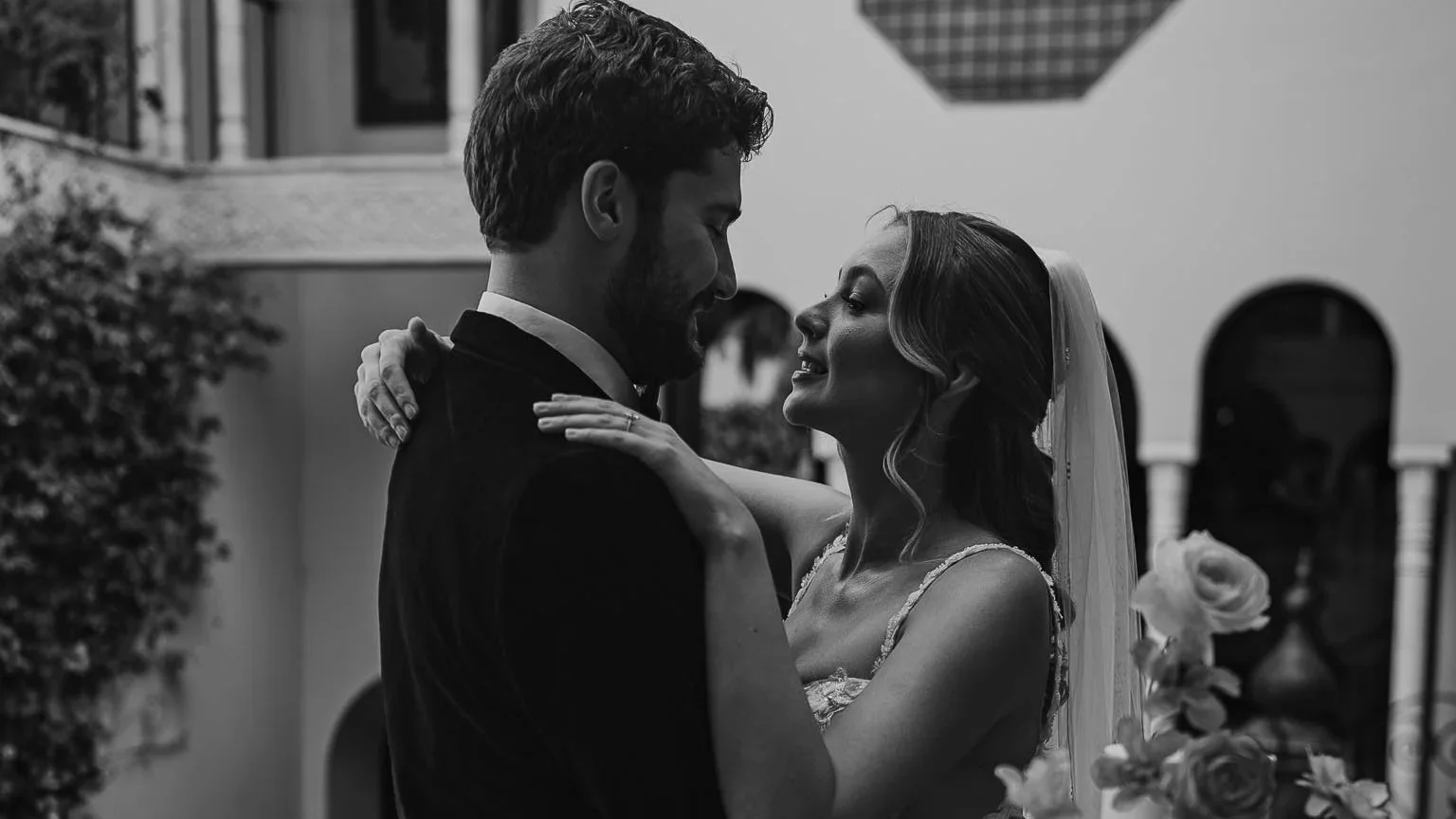
What is a wedding content creator?
A wedding content creator is typically hired to capture your day in a “social-first” way—think vertical clips, behind-the-scenes moments, and short-form edits you can post quickly to Instagram or TikTok. Publishers and directories describing the role consistently frame it as short-form, fast-delivery content designed for social channels, often captured only on a phone. Indeed, it’s origins were formed by the rise in popularity of social media content and the need for vendors, businesses and personalities to show behind the scenes as they worked, and it developed from there.
In other words, a content creator is not trying to make a cinematic wedding film. They are trying to give you immediacy. The idea is that you get hundreds of candid clips, plus a handful of edited reels within a short timeframe—often within 24–48 hours—so you can relive and share moments immediately (taken from sources found here)
That can be a genuine value add, particularly if you’re big on your socials, you have friends and family overseas who will be following along, or you simply love the idea of having a “digital scrapbook” of the day straight away.
It also tends to be a different energy. Many couples describe content creators as an “undercover guest” presence, capturing the small moments you might not see—glances, laughter, quick hugs, candid chaos—without the expectation of perfection. That’s the appeal.
What a content creator is usually not responsible for is cinematic structure, multi-source audio capture, complex colour work, and the kind of post-production that shapes a story over time. Those are different disciplines that require time, more specialised and professional equipment, a larger editing setup and an understanding of how to tell a dynamic and comprehensive story in just a few short minutes.
What does a wedding videographer do?
A wedding videographer’s job is to craft a finished wedding film (or a set of films) that tells the story of your day in a polished, intentional way. That usually means professional cameras and lenses, stabilisation tools, lighting decisions, and, critically, professional audio capture—especially for vows and speeches. The equipment a wedding videographer brings to your wedding day has been carefully selected and more often than not is valued in the tens of thousands of pounds.
If a wedding videographer is fine art or editorial in style, like I am, then that also means they are professional’s in posing and formulating moments that look truly breathtaking in your wedding film- a skill that takes years to learn.
Most couples don’t realise this until later, but audio is often the difference between “nice footage” and “film that hits you in the chest.” If your vows matter, if speeches matter, if you want to hear the atmosphere of the room, that’s where experienced wedding videography earns its keep. Audio forms the backbone of any wedding film a videographer creates, and you’ll find a vast array of specialist recorders in any videographers arsenal.
A videographer is also typically working within an editing process that can take weeks, because the output is designed to be watched again and again. A well-paced film has an arc, uses sound intentionally, balances atmosphere with story, and creates a sense of memory rather than simply showing moments. It’s not about just delivering beautiful clips- it’s about creating a visual legacy you can look back on, time and time again.
If you want an editorial, cinematic finish, the craft expands again. You’re not only paying for coverage; you’re paying for the ability to make difficult light look beautiful, to capture and layer sound cleanly, to shape a story that feels like you, and to deliver something that still holds up years later.
The simplest way to think about it
A content creator is for immediacy and sharing. A videographer is for legacy and storytelling.
Many couples will benefit from one. Some will benefit from both. The best decision depends on what you want to feel after the wedding, not what you want to post the next morning. Keep reading however, because as i’ve already mentioned, there is a middle ground between the two that is perfect for the majority of couples planning their weddings.
The key differences that matter to couples
You can compare these services across lots of small details, but there are a few differences that genuinely change outcomes.
Storytelling and structure
Content creation is typically moment-first. It’s designed to capture lots of small scenes for short edits. The output is often a collection of clips and reels rather than a single cohesive narrative.
Videography is typically story-first. A good film is not just a sequence of highlights; it has pacing, contrast, atmosphere, and meaning. The day feels like it builds.
If you’re the kind of couple who wants to relive the emotional rollercoaster—anticipation, ceremony, speeches, evening energy—videography is built for that.
Audio: vows, speeches, and atmosphere
This is the biggest separator.
A phone can capture sound. However, it cannot reliably capture clean, isolated audio in a real wedding environment: wind, distance, echoing rooms, crowded dance floors, multiple speakers, mixed microphone feeds, sudden volume shifts.
Professional videography typically involves multiple audio sources and redundancy. That’s why cinematic films can weave vows and speeches through the story without the soundtrack collapsing into muffled noise.
If you know your vows and speeches will matter to you later, treat audio as a priority when deciding between these services.
Reliability in difficult conditions
Modern phones are impressive. In bright, simple lighting, they can look beautiful.
But weddings are rarely “bright and simple.” Think dark churches, mixed indoor lighting, harsh midday sun, fast movement, dancing, weather, candlelight, marquees, and sudden transitions.
Professional cameras and lenses are designed for these environments, and professional operators know how to manage them, manipulate them and still obtain a high-quality result. In fact, speaking from my personal experience, my wedding videography equipment has been built over many years specifically to handle these types of scenarios.
That’s why videography tends to remain consistent across the entire day, not just in ideal moments.
Deliverables and viewing habits
Content creator deliverables usually lean into vertical, short-form clips and quick edits for social. Hitched, for example, explicitly frames content creators as suppliers focused on short-form wedding content for immediate posting.
Videography deliverables tend to be designed for viewing in a more intentional way: a highlight film that feels like a short cinematic piece, plus longer films or separate ceremony/speech edits depending on the approach.
Neither is “better” in isolation. They serve different viewing habits.
Turnaround and gratification
Content creation is built for speed- it is potentially it’s main selling point. Many providers advertise delivery within 24–48 hours.
Videography is built for craft. That takes longer, because the output is more complex and more refined. It’s a much more in-depth process.
A useful question is: would you rather have something tomorrow, or something you will still be moved by in five years? Many couples choose both, but if you must prioritise one, that distinction matters. If you prefer something raw, unedited and quick, content creation may be the better option for you. Want something you’ll be able to watch with your grandchildren, hearing all the voices of your loved ones that will feel as relevant then as it does now, then videography is better suited to you.
What do wedding content creators cost in the UK?
Content creator pricing varies widely, and it’s changing quickly because the category is growing. As the basic starter kit for becoming a content creator is something everyone has access to in their pocket, there’s a wide spectrum.
To give you a grounded, non-hype range: UK wedding directories list many content creators in the hundreds of pounds bracket, often roughly £300–£900 depending on coverage and deliverables.
Some services advertise lower starting points for shorter coverage, and others charge more when they include more edited reels, longer attendance, or travel. The key is not the number on its own. The key is what you’re actually receiving and how it will be delivered.
If you are planning a high-end wedding with a tightly curated supplier team, pricing is not the only factor. You want professionalism, discretion, and the ability to integrate smoothly without disrupting your photographer or videographer (more on this later).
What do wedding videographers cost in the UK?
Wedding videography pricing also varies widely, but major UK planning platforms commonly cite average spend figures in the low-to-mid £1,000s. Bridebook, for example, has cited an average spend around £1,300–£1,500 for experienced professionals, however in my experience I believe the brackets lie a lot higher than this.
Hitched also frames common pricing tiers and suggests that comprehensive packages often sit in the £1,000–£1,500 area, while many professionals consider £1,000–£2,000 a strong “value” window depending on what’s included.
If you are interested, I have another dedicated blog article explaining how much you can expect wedding videography to cost you, as well as what you can expect from each level of pricing.
Those figures sit in the “broad market” and do not fully describe premium cinematic work, multi-shooter coverage, destination logistics, or highly editorial approaches. The right way to use these ranges is as a reference point—not a rule.
Why are wedding videographers more expensive? More equipment, time, education, software, hardware- pretty much everything across the board.
Which one should you choose?
If you are deciding between these services, the simplest path is to start from your priorities.
Choose a wedding content creator if your priority is immediacy
You want your day captured in lots of candid, shareable snippets. You want to post quickly. You want behind-the-scenes moments you might not otherwise see. You want short edits within a day or two.
That is a valid priority, and it suits couples who use social media as part of how they communicate and remember.
Choose a wedding videographer if your priority is legacy, emotion, and story
You want to hear vows and speeches cleanly. You want a film you will still love years later. You want a finished piece that feels editorial, cinematic, and emotionally true. You want the day to unfold on film in a way that feels like memory, not like content.
If that resonates, videography is not just “nice to have.” It becomes one of the few suppliers that continues increasing in value after the wedding.
Do you need both a videographer and a content creator?
Many couples do not need both. But some absolutely will benefit from both, especially when social sharing matters and you also want a cinematic film.
The key is how they work together.
Hiring both should feel like adding calm coverage, not adding chaos. When it works well, the content creator quietly collects the small candid moments while the videographer focuses on the story, audio, and cinematic craft. You get both outcomes, without your day feeling crowded.
Where it goes wrong is when roles aren’t clear, everyone is chasing the same moments, and the couple feels watched rather than present.
If you’re considering both, it’s worth treating the decision like you would treat hiring any two key suppliers: align expectations early, and ensure they’re comfortable collaborating.
How to hire both without making the day feel like a production
This is the section most blogs miss, but it’s the practical difference between a good experience and a stressful one.
Decide what you want each person to own
A clean approach is to give the videographer ownership of the “once-only moments” where quality and audio matter most: ceremony, vows, speeches, first dance, and the moments you want crafted into a film.
Then give the content creator ownership of “in-between” moments: behind-the-scenes, candid guest clips, getting-ready atmosphere, quick reactions, social-friendly transitions, morning-of excitement, and playful snippets that wouldn’t naturally live in a cinematic edit.
If you try to make both people responsible for everything, they’ll both be in the same place at the same time, and you’ll feel it.
Keep the content creator slightly behind the main lens during key moments
If you are investing in a cinematic film, you want the primary angles and the cleanest access for the videographer during ceremony and speeches.
That does not mean the content creator cannot capture those moments. It means they should capture them as secondary angles, from the side or behind, without stepping into the videographer’s compositions or blocking the photographer.
This becomes even more important in churches, small ceremony spaces, and during speeches where movement is restricted.
Ask whether they’ve worked with other suppliers before
The best content creators and videographers both understand this: weddings are not film sets. They are live events with pressure and emotion. People who have experience working within professional teams tend to be calmer, less intrusive, and better at reading when to step back.
A premium perspective: what high-end couples typically prioritise
In the luxury end of the market, couples tend to value two things most: a calm experience and work that feels timeless.
That’s why many high-end couples choose a videographer first, and then decide later whether they want content creation as an additional layer. If the cinematic film is the non-negotiable, it makes sense to secure that first.
It also matters because premium weddings often involve complex lighting and schedule density: multiple locations, church ceremonies, speeches, golden hour portraits, evening set pieces. Those conditions tend to favour professional capture and experienced storytelling.
If you’re planning a planner-led wedding, an estate wedding, a multi-day celebration, or a destination weekend, your supplier choices should reduce stress, not add it.
If you’re building your team right now, you may also find this helpful:
My honest view as a wedding videographer, and the workaround you may not have considered
Before you read this next section, I’d like you to know that I am fully aware of my biases here (after all, as a professional wedding videographer I have to fully believe in my craft and work in order to create to the best of my ability for my couples), but these are my real-world experiences and what I believe is the best workaround.
In my experience, more often than not, content creators and videographers pull in different directions, meaning that they diminish each other on the day itself. They are focussed on different things, prioritising different aspects of each stage of the day.
An example of this would be what each is looking to capture. I’ve been filming bridal preparations before that were running on-time, in beautiful scenarios, where I could have captured incredibly stunning bridal portraits and moments between the bride and her bridal party. Instead, I captured nothing useable for the film and photographs because content creators were curating specific trend-based Tiktoks and Reels, which then meant the bride was delayed leaving for the ceremony and that had a knock on effect throughout the day. A missed opportunity and a frustrating one for me.
Now this isn’t meant to be a criticism of content creators- after all, they’re hired by the couple the same as me, and often given direction or shot lists to fulfil. My issue lies more in a conflict of styles and approaches, rather than the craft of content creation. That is just one example, however I have plenty more I could talk about.
I would never let my ego take charge and start claiming that ‘I’m the most important supplier there’ as some would do- that kind of thing really isn’t my style. My frustration comes from my experience and what I know the couple are expecting from me, and knowing what could have been.
So, what’s the workaround?
In short, you can have both on your wedding day, working in sync and in harmony, without compromise- and that can happen two different ways.
The first way is to find a wedding videographer, like myself, who offers content creation as an additional extra. I have a small dedicated camera mounted on my main film camera, that runs constantly throughout the day. I often set this camera to record vertically for my own social media stories and clips, and it’s a reliable and professional source of video for me. Confetti walks, that emotional dress reveal with dad, a Champagne spray or electric first dance, captured in both widescreen and vertical formats, with zero compromise.
The second way is to invest into a video and photo team that has a content creation arm- again, something I offer within my investment options. So you’ll have a videographer, photographer and content creator all there on your wedding day, however the difference is the control and intent. When I run my photo and film teams, we work closely together for a single, common goal and we don’t compromise each other- and content creation can fold very nicely into that.
So, if after making it this far into this article you feel like you do want both videography and content creation, my professional advice to you would be to hire them from a single team and mitigate all of the issues that could occur from separate entities.
The question couples rarely ask, but should
Instead of asking “Content creator or videographer?”, ask: “What do I want to feel when I watch this back in ten years?”
If the answer is “I want to hear voices clearly, feel the atmosphere, and relive the emotional arc,” videography belongs at the core.
If the answer is “I want to share lots of candid clips instantly and relive the day tomorrow,” content creation becomes appealing.
If the answer is “both,” then the decision becomes a coordination exercise rather than a competition.
Watch a full wedding film (so you can judge what videography delivers)
If you’re comparing services, short clips won’t tell you the truth. A full film shows whether the storytelling holds up, whether audio is clean, and whether the day feels cohesive.
Conclusion
Wedding content creators and wedding videographers aren’t technically competing services- they’re more different tools for different outcomes.
A content creator is there to capture the day as social-first moments—quick, candid, and delivered fast—so you can relive and share it immediately. That role is now widely described as a short-form, quick-turnaround service, often phone-led and optimised for social posting.
A videographer is there to craft something deeper: a story-led film with pacing, atmosphere, and clean audio that allows you to hear voices, feel the room, and return to the emotional and memorable moments of your wedding for years to come.
If you have to choose one, choose the service that matches what you want to keep. If you want both, hire with clarity and coordination so your day stays calm, and each supplier can do their job properly.
Get In Touch
FAQ: Wedding videographer vs wedding content creator (UK)
-
A wedding content creator is typically hired to capture short-form, social-first clips—often delivered quickly—so couples can share moments on Instagram or TikTok. Wedding publishers describe them as distinct from photographers and videographers and focused on immediate, shareable content.
-
No. A content creator focuses on short-form social content and fast delivery, while a videographer creates a finished film designed for long-term viewing, usually with professional camera systems and multi-source audio capture.
-
Often, yes. Multiple wedding publications describe wedding content creation as primarily phone-led, commonly using iPhones.
-
If your only goal is quick social clips, possibly. If you want a story-led wedding film with clean vows and speeches audio, consistent quality in difficult lighting, and a timeless finish, a videographer is the more reliable option.
-
Some couples do, particularly if they want both immediate social content and a cinematic film. The key is to define roles so the day doesn’t feel crowded and the professional capture is protected during key moments.
-
Pricing varies, but UK directories and publisher examples commonly place many services in the hundreds-of-pounds range, often roughly £300–£900 depending on coverage and deliverables.
-
Average spend benchmarks cited by major wedding platforms often sit in the low-to-mid £1,000s, with wide variation depending on experience, approach, coverage, and deliverables. For cinematic, editorial style wedding films pricing will be upwards of £4,000.
-
Audio and consistency. A cinematic film relies on clean vows/speeches audio and stable performance in difficult lighting and fast-moving moments. Phones can look excellent in ideal conditions, but audio and low-light reliability are the most common limitations.
-
It can if roles aren’t clear. With the right team and a calm approach, it can still feel natural. The key is choosing suppliers who prioritise discretion and working collaboratively.
-
Not if they’re experienced and the roles are clear. Many directories describe content creators working alongside the photo/video team as normal, but coordination matters, especially during ceremony and speeches.
-
Often, yes, because luxury weddings are style-sensitive and logistically complex. A refined, story-led film tends to hold value long after trends change, while content creation is primarily immediate.